 615-271-5511
Quick Summary: Staying active is one of the most powerful things seniors in independent living can do to protect their health and independence. This article shares practical, motivating fitness tips—from daily walks to group classes—that show how regular movement at every ability level supports healthy aging and a vibrant, fulfilling lifestyle.
Getting older doesn’t mean slowing down; it means choosing how you move forward. For seniors living independently, staying active is one of the most important investments you can make in your long-term health, happiness, and freedom. Whether you’re already committed to a routine or just thinking about where to start, the fitness tips for seniors in independent living below are designed to meet you exactly where you are.
At Clarendale at Bellevue Place in Nashville, Tennessee, wellness isn’t an afterthought; it’s woven into daily life. The community’s amenities and programming are built to help residents stay engaged, energized, and thriving, no matter their starting point.
Why Exercise Matters for Older Adults
The research is clear: regular physical activity is one of the most effective tools for healthy aging. Exercise supports cardiovascular health, bone density, muscle strength, balance, cognitive function, and emotional well-being. For seniors in independent living, consistent movement can also delay or prevent the need for higher levels of care, literally preserving independence.
The good news? You don’t need to run a 5K or spend hours at the gym. Studies from the Centers for Disease Control and Prevention (CDC) show that even moderate activity—like brisk walking for 150 minutes a week—delivers significant health benefits for older adults.
When it comes to healthy aging exercise, consistency beats intensity every time.
5 Practical Fitness Tips for Seniors in Independent Living
Physical activity can look different for everyone. Let’s look at five fitness tips for seniors in independent living.
1. Start With What You Enjoy
The best senior exercise in independent living is the one you’ll actually do. If you love being outside, a daily walk around the community or a nearby trail is an excellent foundation. If socializing motivates you, a group fitness class might be your ideal entry point. Don’t force yourself into a routine that feels like a chore. Movement should feel like something you’re choosing, not enduring.
2. Incorporate Movement Into Daily Routines
You don’t need a gym to stay active. Some of the most effective strategies for staying active for older adults are built right into everyday life:
- Take the stairs instead of the elevator when possible.
- Park farther away from your destination on errands.
- Walk to the dining room, common spaces, or nearby shops rather than driving.
- Do a few minutes of gentle stretching while watching TV or listening to music.
- Tend to a garden, take care of a pet, or volunteer in community activities, all of which involve meaningful movement.
These micro-movements add up significantly over the course of a day and help establish an active mindset.
3. Focus on the Four Pillars of Senior Fitness
A well-rounded senior fitness program should address four key areas:
- Aerobic Endurance: Exercises like walking, swimming, cycling, and dancing support heart and lung health.
- Strength Training: Light resistance bands, bodyweight exercises, or light free weights preserve muscle mass and support bone density.
- Balance and Stability: Through tai chi, yoga, or targeted exercises, seniors can reduce the risk of falls, one of the leading causes of injury in older adults.
- Flexibility: Daily stretching, yoga, or gentle movement helps keep joints mobile and reduce stiffness.
Even dedicating just a few minutes a day to each pillar can make a meaningful difference over time.
4. Take Advantage of Group Fitness and Community Programming
One of the underrated advantages of living in a senior community like Clarendale at Bellevue Place is the built-in access to group programming. Group fitness classes offer far more than just physical benefits; they provide social connection, accountability, and a sense of routine.
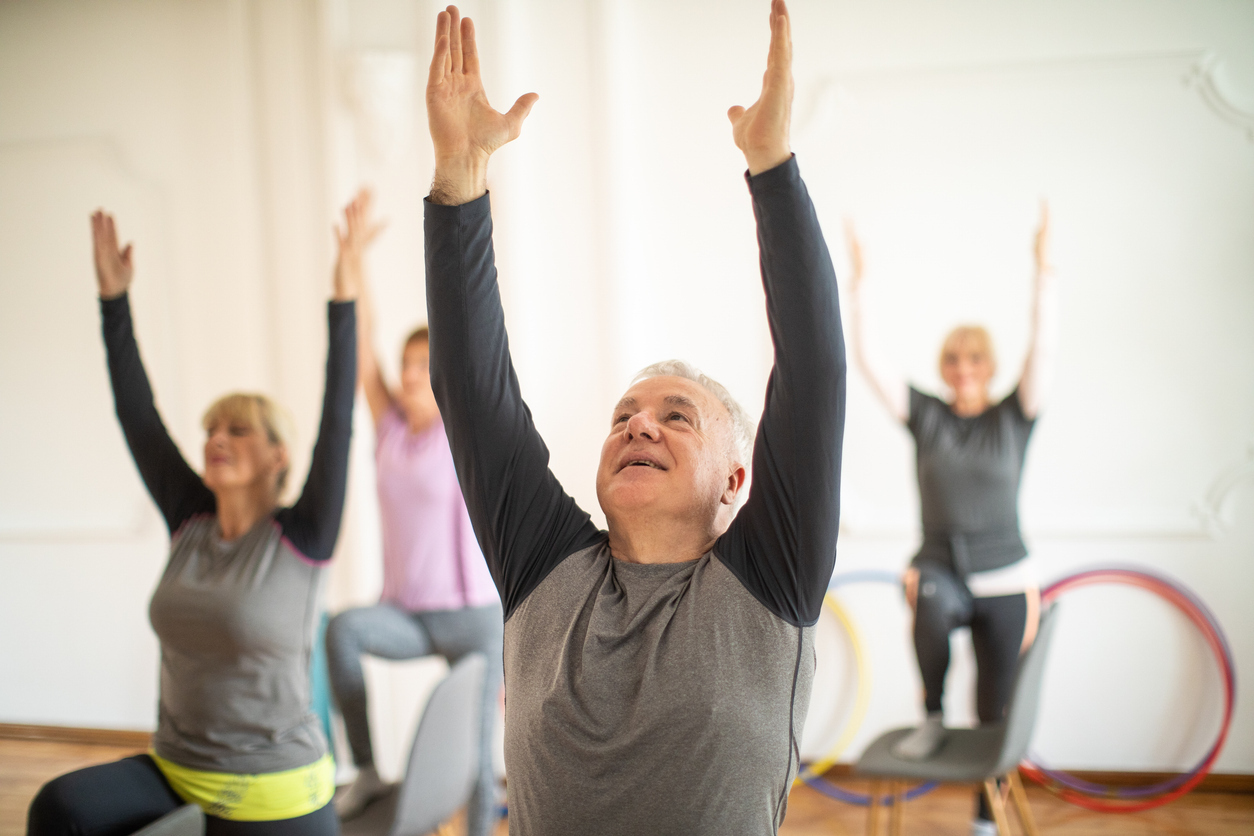
Exercise classes in a community setting are designed to meet a range of ability levels. Whether it’s a seated stretching class, a walking club, or an aerobics session, there is typically something for everyone. Participating in a structured senior fitness program also provides residents with guidance from trained instructors who understand the unique needs of older adults.
If you’re new to group fitness, start small. Attend one class, introduce yourself, and give it a few weeks. Many residents find that the social aspect becomes just as motivating as the fitness benefits themselves.
5. Listen to Your Body and Talk to Your Doctor
Fitness tips for seniors in independent living always come with an important caveat: personalization matters. What works well for one person may not be appropriate for another, especially if you’re managing chronic conditions, recovering from an injury, or returning to exercise after a long break.
Before starting a new routine, it’s worth having a conversation with your primary care physician or a physical therapist. They can help identify any restrictions, recommend exercises that support your specific health goals, and set safe parameters. Many senior living communities also have on-site wellness staff or nurse liaisons who can provide guidance.
Once you’re cleared to move, pay attention to how your body responds. Mild soreness after a new workout is normal. Sharp pain, dizziness, or unusual shortness of breath are not normal and warrant a check-in with a health professional.
The Link Between Senior Exercise and Long-Term Independence
There is a direct and powerful connection between senior exercise in independent living and the ability to remain independent longer. Regular physical activity helps seniors:
- Maintain the strength and balance needed for activities of daily living, like rising from a chair, carrying groceries or other items, and walking distances.
- Reduce the risk of falls and fractures—one of the most common reasons older adults transition to higher levels of care.
- Manage chronic conditions like hypertension, diabetes, and arthritis more effectively.
- Support cognitive health and reduce the risk of dementia.
- Sustain emotional well-being and reduce symptoms of depression and anxiety.
Simply put: the more consistently you move, the more likely you are to stay in the driver’s seat of your own life for years to come. Healthy aging and exercise are inseparably linked.
Making It Last: Building a Routine That Sticks
The challenge with any fitness goal isn’t usually getting started; it’s staying consistent. Here are a few strategies that can help:
- Schedule It: Treat your daily walk or fitness class like an appointment you can’t miss.
- Track Your Progress: Even a simple journal or step counter can be motivating.
- Find a Buddy: Having a friend or neighbor to exercise with dramatically increases follow-through.
- Celebrate Small Wins: Walked every day for two weeks? That’s worth acknowledging.
- Be Flexible: If you miss a day, just resume the next day. Consistency over time matters far more than perfection.
At Clarendale at Bellevue Place, the community calendar is filled with programming and activities designed to make staying active both easy and enjoyable. From exercise classes and walking groups to planned outings and social events, there is no shortage of opportunities to keep moving.
Your Next Step Toward an Active Independent Life
Choosing an independent living community isn’t just a housing decision; it’s a lifestyle decision. The right environment can make healthy aging exercises feel less like discipline and more like a natural part of daily life.
If you’re exploring your options or want to learn more about the wellness programming available at Clarendale at Bellevue Place, we encourage you to schedule a visit. Come see the fitness amenities, meet the team, and experience firsthand what an active, vibrant senior living community feels like.
It’s never too late to start moving toward the life you want—and the community that supports it.
Frequently Asked Questions
What are the best exercises for seniors in independent living?
The best exercises combine aerobic activity, strength training, balance work, and flexibility. Walking, swimming, yoga, tai chi, resistance band exercises, and group fitness classes are all excellent options. The most important factor is choosing activities you enjoy so you’ll stay consistent.
How much exercise do older adults need each week?
The CDC recommends that older adults aim for at least 150 minutes of moderate-intensity aerobic activity per week, plus muscle-strengthening activities on two or more days. Even modest amounts of movement deliver real health benefits, so starting small and building gradually is a perfectly valid approach.
Are group fitness classes safe for seniors?
Yes! When led by qualified instructors, group fitness classes designed for older adults are safe and highly beneficial. Most classes offer modifications for different ability levels. It’s always a good idea to consult with your doctor before starting a new exercise program, especially if you have existing health conditions.
How does exercise support independence for older adults?
Regular exercise helps seniors maintain the strength, balance, and cognitive function needed to manage daily activities on their own. It also reduces the risk of falls, manages chronic conditions, and supports emotional well-being—all of which are closely tied to long-term independence.
What fitness amenities are available at Clarendale at Bellevue Place?
Clarendale at Bellevue Place offers exercise classes and a range of wellness-focused amenities and programming. Contact us today or schedule a visit for the most up-to-date details on available fitness offerings.